From power analysis to APA-formatted results, without leaving the workspace
Psychology runs on a specific toolchain: PsycInfo-style literature work, power analyses, validated scales, ANOVA tables, and APA 7 everywhere. Kahubi covers that arc in one place — the literature, the statistics on your own data, and a manuscript that cites your sources in APA by default.
Free plan included. No credit card required.
Where Kahubi fits your work
The tests your methods section names
T-tests, ANOVA with post-hocs, correlation and regression, chi-square, reliability (Cronbach’s alpha), PCA and more — run on your CSV, with the APA-formatted results paragraph written into your draft.
A literature that answers back
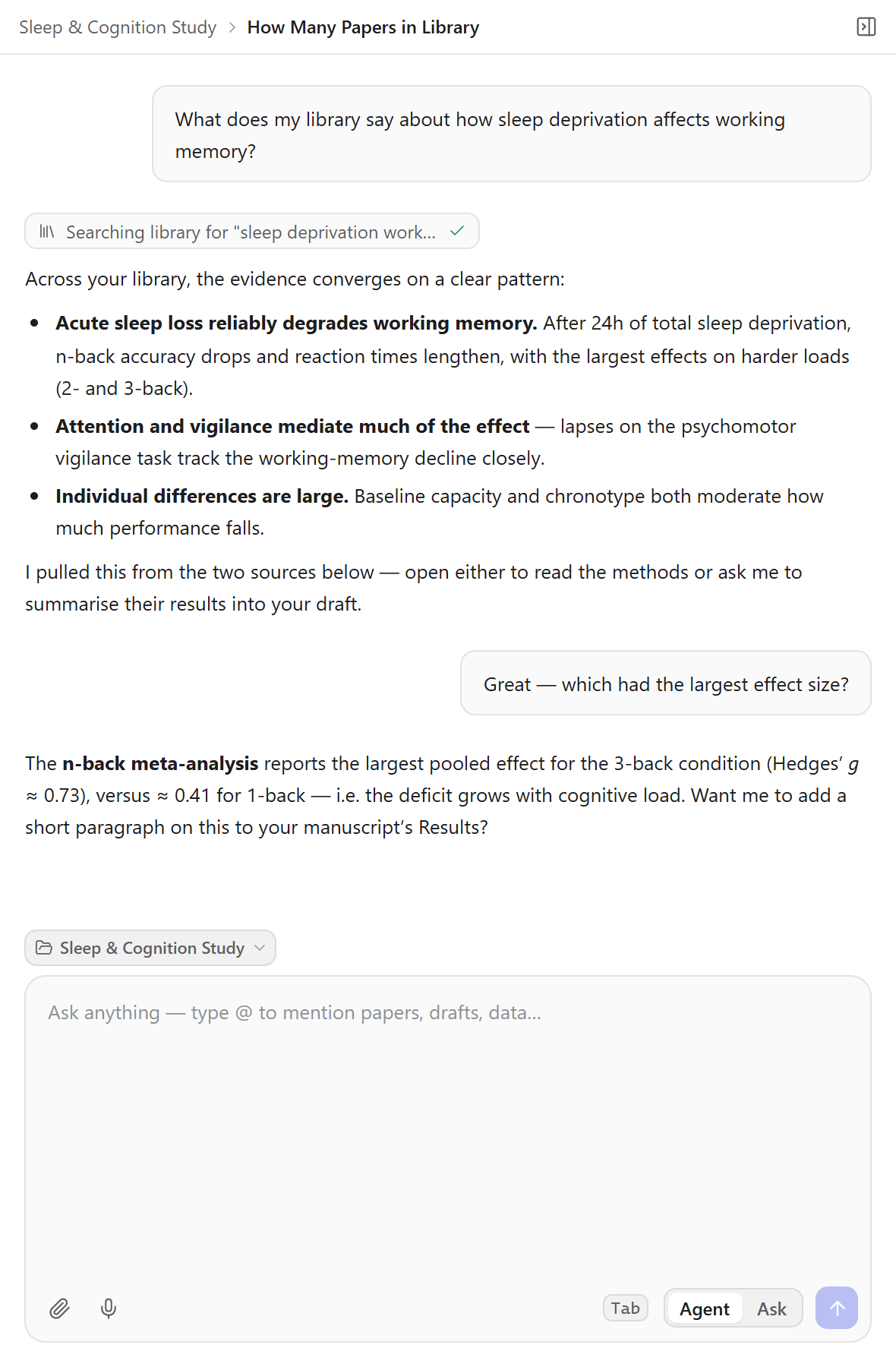
Load your PDFs and ask where the field disagrees, which measures dominate, or what the seminal paper actually claimed — answers come with citations to your own library.
Reviews with the process documented
Question, search keys, screening against your criteria, and a written review following PRISMA — the workflow psychology journals increasingly expect even outside formal meta-analyses.
Scales and surveys with live collection
Design the instrument, share a collection link, and analyze responses — including reliability of your scales in your sample — in the same project.
APA 7 by default, your voice by design
Citations render in APA 7 (or any major style), and drafts start from a style profile learned from your own publications rather than generic chatbot prose.
Qualitative work handled properly
Interviews transcribed with speaker labels on an EU endpoint, then coded with thematic or other frameworks — with the audit trail your ethics application promised.
Chat with your library, not a generic chatbot
Kahubi answers from the papers, drafts, datasets, and transcripts you actually have. Type @ to pull any source into the conversation; the agent reads it, searches your library, and cites what it used.
- @-mention papers, drafts, datasets, interviews, and files
- Select text in any PDF to explain, summarize, or translate it
- Agent searches OpenAlex and the web, and imports papers for you
Write accurate manuscripts, grounded in your sources
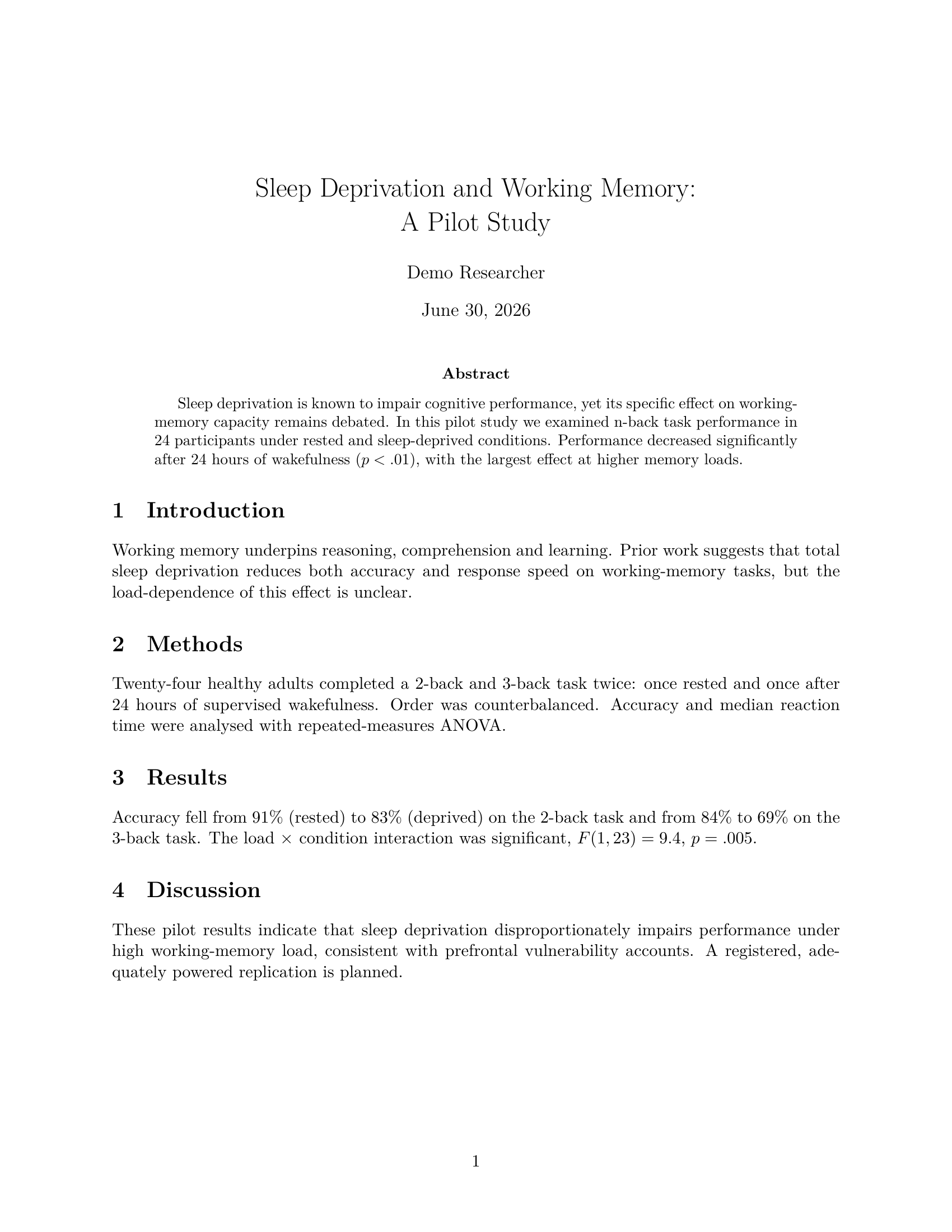
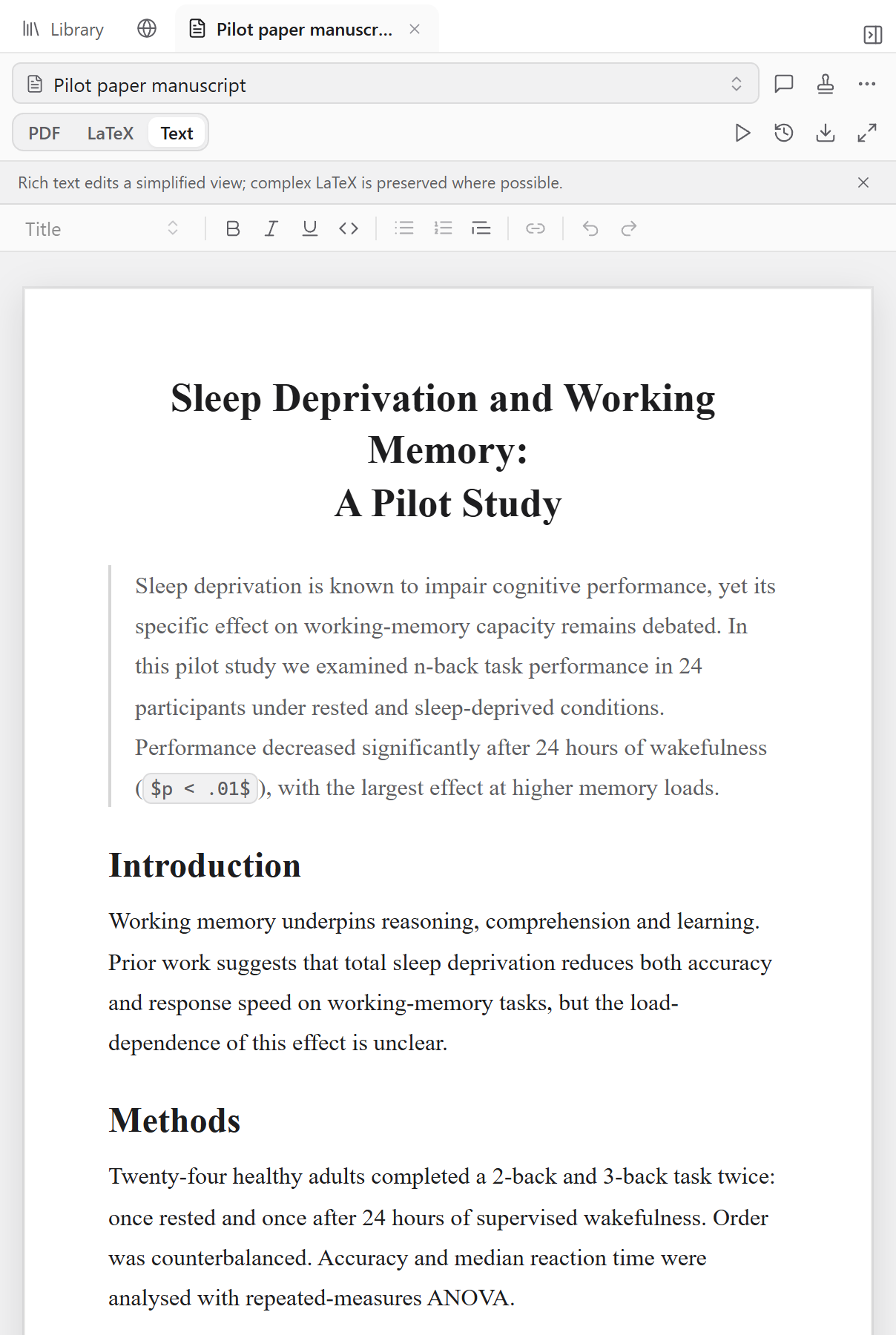
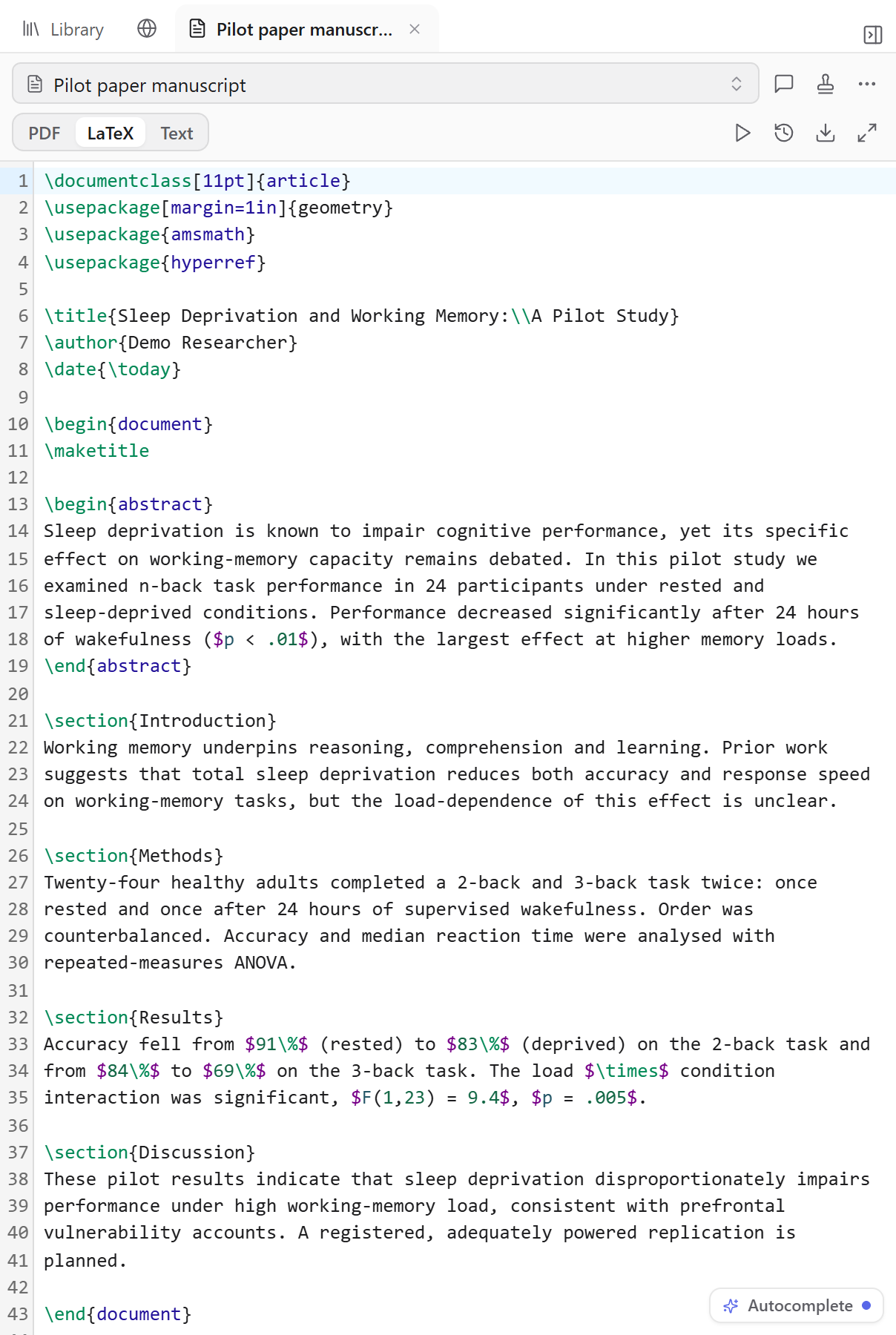
Draft in a clean editor and let the AI help — it writes in your voice, learned from your own publications, and every paragraph stays anchored to the papers, data, and notes you actually have, never invented. Read it as a formatted PDF, edit it like a Word document, or drop into LaTeX when you want fine control.
- Writes in your voice: a style profile learned from your published work, not a generic chatbot register
- Grounded in your library: the AI writes from your real papers and data, and cites what it used
- One click to a compiled PDF, plus Word (.docx) export and full version history
What changes
- Power analysis at design time, effect sizes at write-up time — the numbers reviewers actually check
- APA 7 citations from a managed library, with Zotero and Mendeley sync
- Preregistration-friendly: documented screening, analysis plans, and version history
- EU processing for participant audio and GDPR-conscious handling throughout
- A real free tier for coursework and pilots
Common questions
Can Kahubi run the statistics my psychology methods course requires?
Does it format everything in APA 7?
Is it suitable for qualitative and mixed-methods work?
Run your next psychology study in one workspace
Literature, power analysis, statistics, and an APA-clean manuscript. Free to start.