Mixed methods without the mixed-up toolchain
Education research is structurally mixed-methods: test scores and survey scales on one side, classroom observations and interviews on the other, APA 7 wrapped around all of it. Kahubi is one of the few workspaces where both halves — and the writing — live in the same project.
Free plan included. No credit card required.
Where Kahubi fits your work
Classroom data, analyzed properly
Compare conditions, correlate scales, and check reliability on your CSVs — with the caveat that matters in education (students nested in classrooms) flagged when designs need more than a t-test.
Interviews and observations as data
Classroom and interview audio transcribed with speaker labels on an EU endpoint, then coded with thematic or other frameworks — segments linked back to the transcript.
Instruments with live collection
Design questionnaires, share a collection link with teachers or students, and analyze responses — including scale reliability — in the same project.
Literature reviews that hold up
Search, screen, and synthesize the education literature with the process documented — for dissertations, funded projects, and journal submissions.
A field with answers attached
Ask your library where interventions worked, for whom, and how outcomes were measured — with citations to the actual studies.
APA writing in your voice
Drafts start from a style profile learned from your own texts, cite in APA 7 from your library, and compile to PDF or export to .docx for whatever the journal or committee wants.
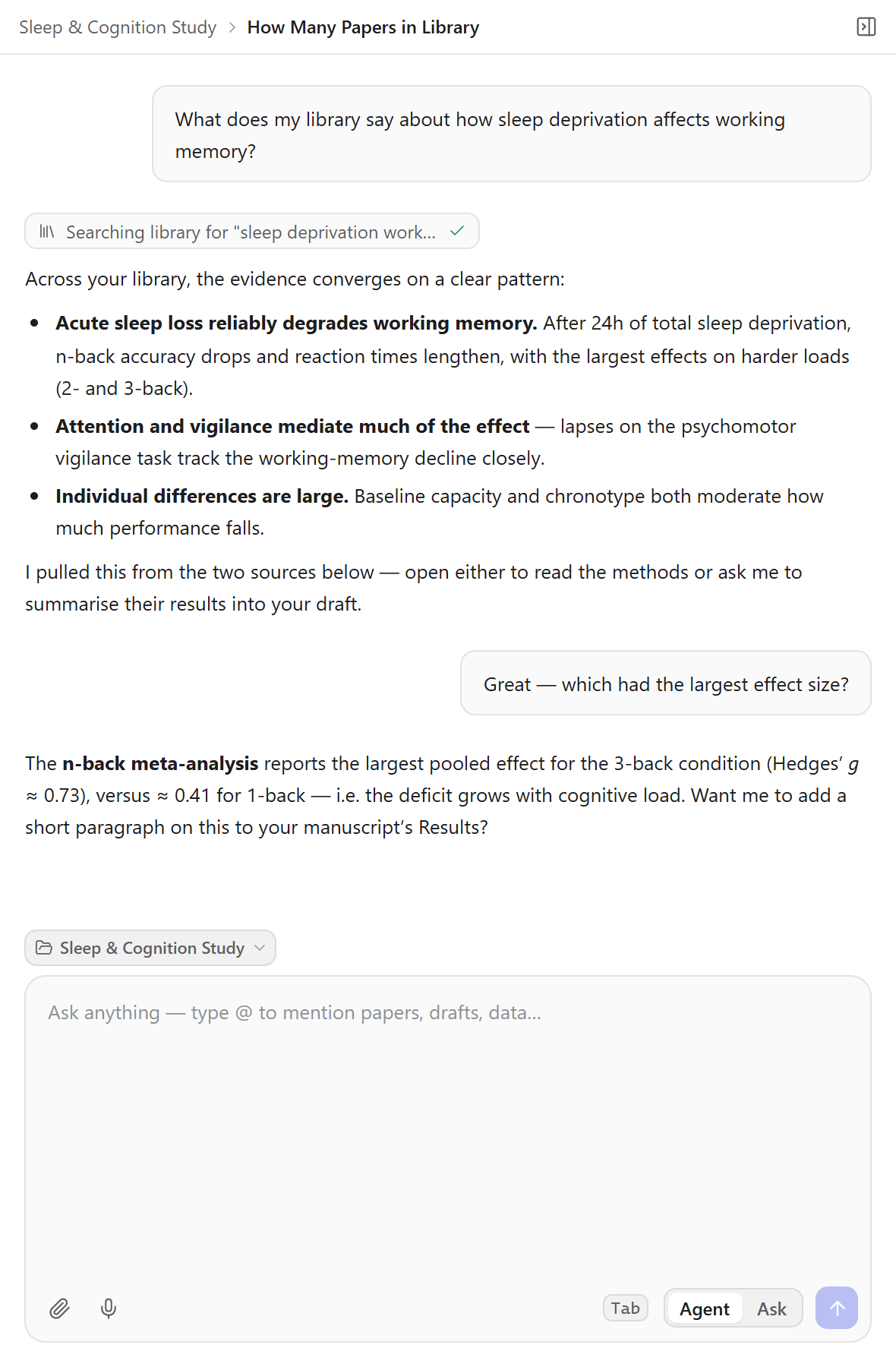
Chat with your library, not a generic chatbot
Kahubi answers from the papers, drafts, datasets, and transcripts you actually have. Type @ to pull any source into the conversation; the agent reads it, searches your library, and cites what it used.
- @-mention papers, drafts, datasets, interviews, and files
- Select text in any PDF to explain, summarize, or translate it
- Agent searches OpenAlex and the web, and imports papers for you
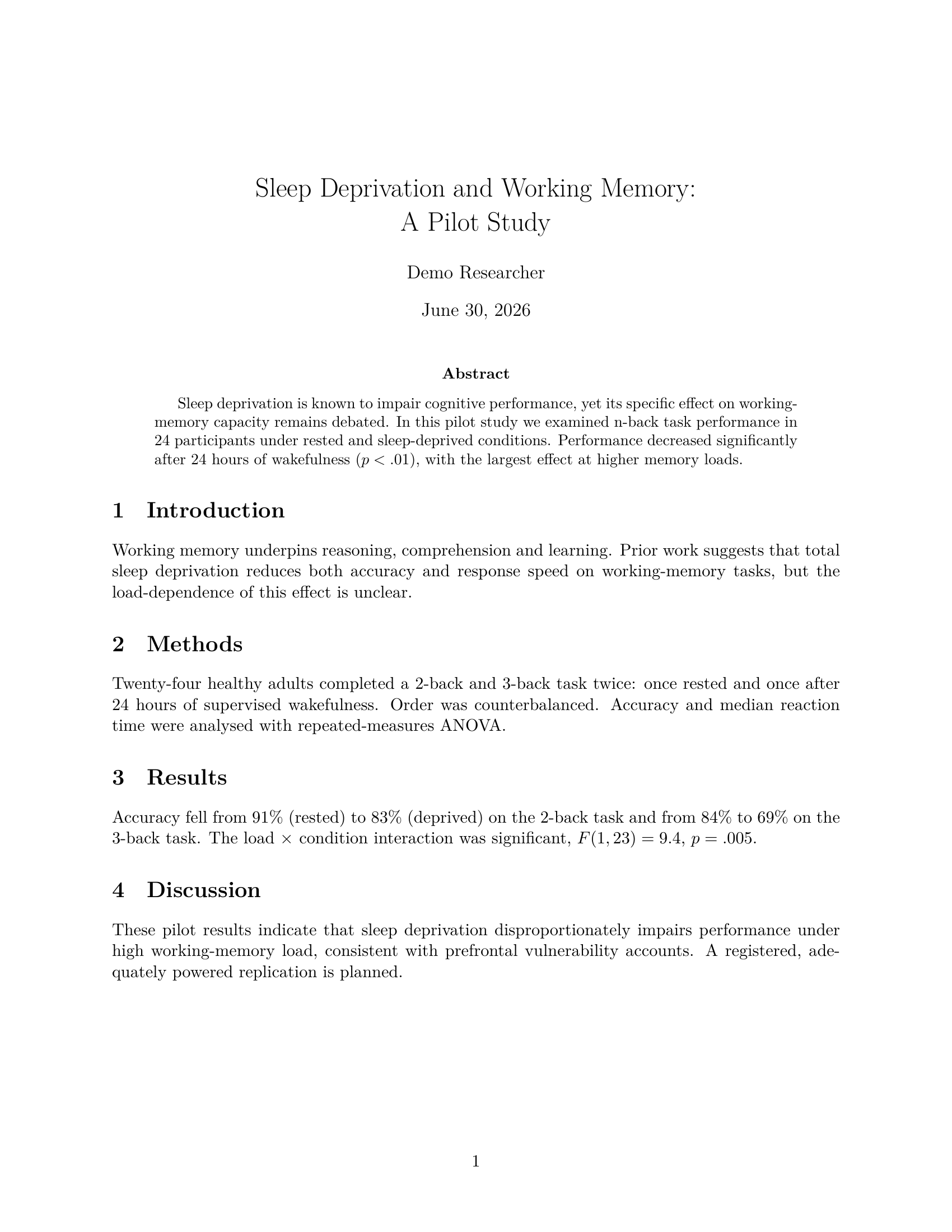
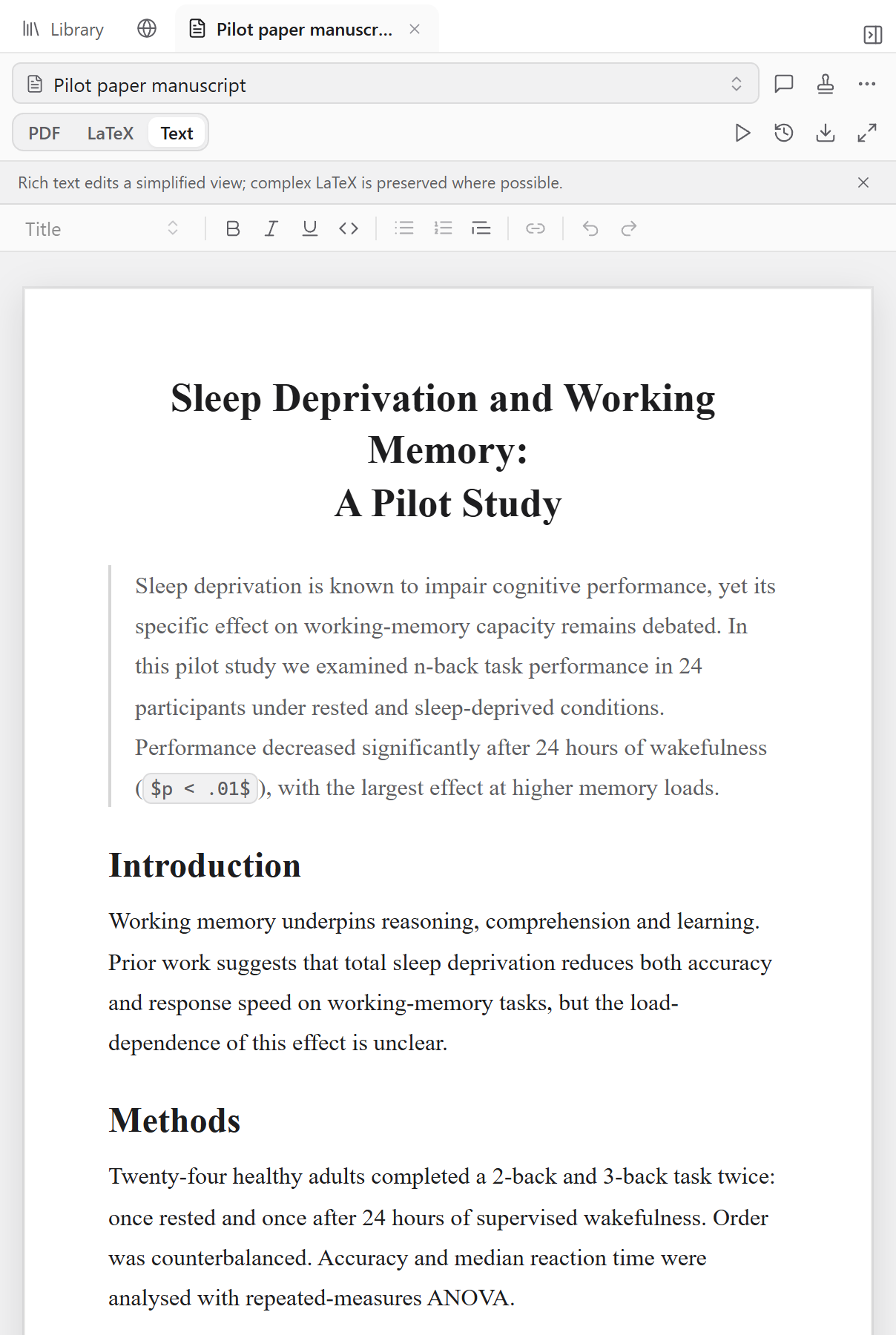
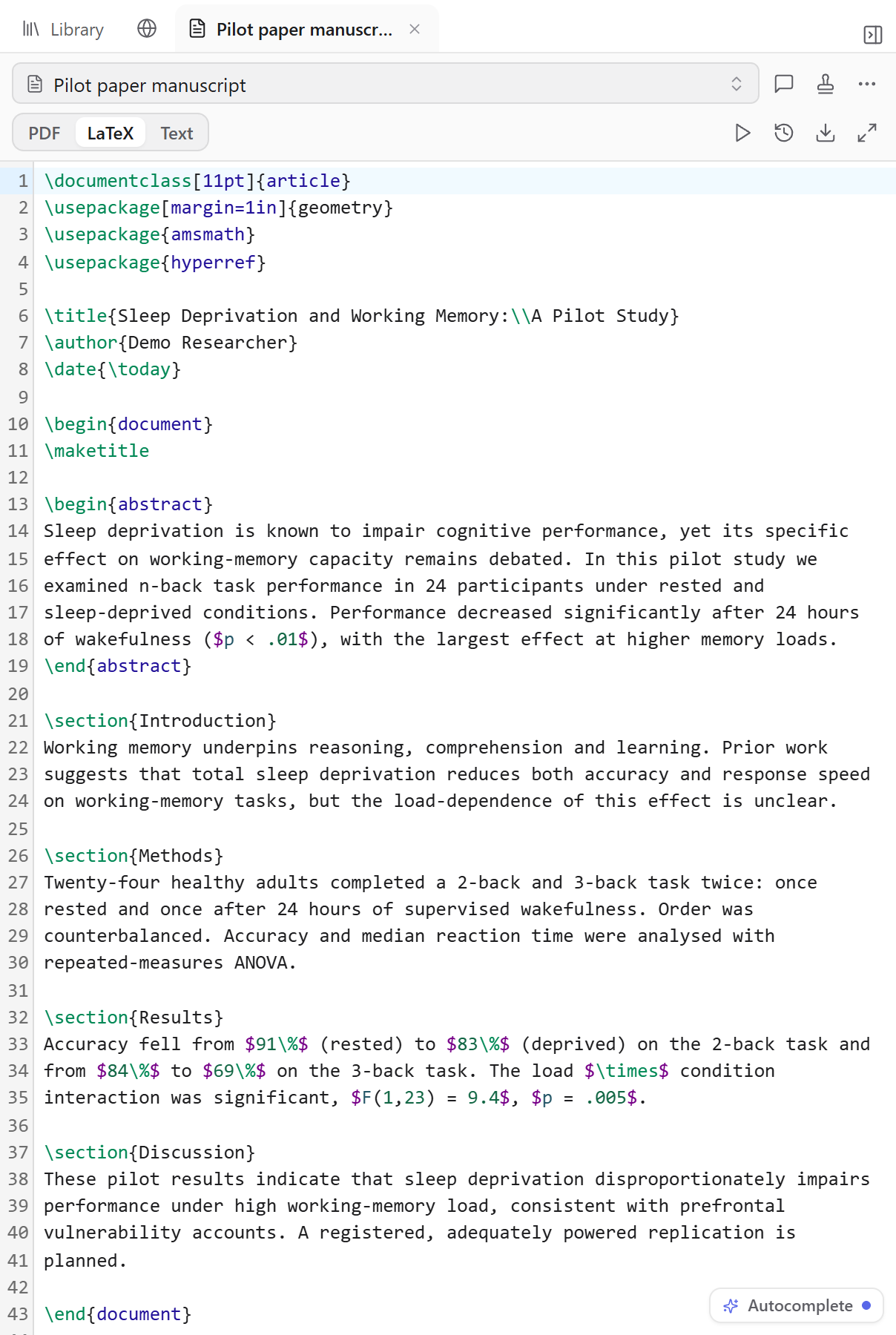
Write accurate manuscripts, grounded in your sources
Draft in a clean editor and let the AI help — it writes in your voice, learned from your own publications, and every paragraph stays anchored to the papers, data, and notes you actually have, never invented. Read it as a formatted PDF, edit it like a Word document, or drop into LaTeX when you want fine control.
- Writes in your voice: a style profile learned from your published work, not a generic chatbot register
- Grounded in your library: the AI writes from your real papers and data, and cites what it used
- One click to a compiled PDF, plus Word (.docx) export and full version history
What changes
- Quantitative and qualitative strands of a mixed-methods study in one project
- Consent-sensitive handling: EU transcription, no training on your content
- APA 7 citations from a managed library with Zotero/Mendeley sync
- Survey design, collection, and analysis without a second subscription
- A free tier that covers a masters project
Common questions
Can Kahubi handle a mixed-methods dissertation?
What about student data and consent?
Does it know education research methods?
Both halves of your study, one workspace
Scores and stories, analyzed and written up together. Free to start.