From clinical question to submitted manuscript, with the process documented
Medical publishing has the strictest process requirements in research: registered questions, PRISMA flows, reporting checklists, Vancouver references, and data handling an ethics committee will interrogate. Kahubi is built around exactly that discipline — and takes the mechanical work out of it.
Free plan included. No credit card required.
Where Kahubi fits your work
The review pipeline, end to end
Question, search strategy, dual-pass screening against your criteria with AI-suggested calls you confirm, and a written synthesis following PRISMA or Cochrane conventions — with the audit trail intact.
Interrogate the trial literature
Ask what endpoints the trials in your library used, where effect estimates conflict, or which populations were excluded — answers cite the papers so claims can be checked.
Analysis with the write-up attached
Group comparisons, correlations, regression and more on your data, reported with effect sizes and confidence intervals in journal-ready form.
Vancouver by default, your register
References render in Vancouver (or APA and four others) from a managed library, and drafts follow a style profile learned from your own publications.
Qualitative health research, compliant
Patient and clinician interviews transcribed on an EU endpoint with speaker labels, coded against COREQ-friendly documentation.
Your specialty, monitored
Follow journals, authors, and topics; get a digest when new trials and reviews land — before the journal club does.
Chat with your library, not a generic chatbot
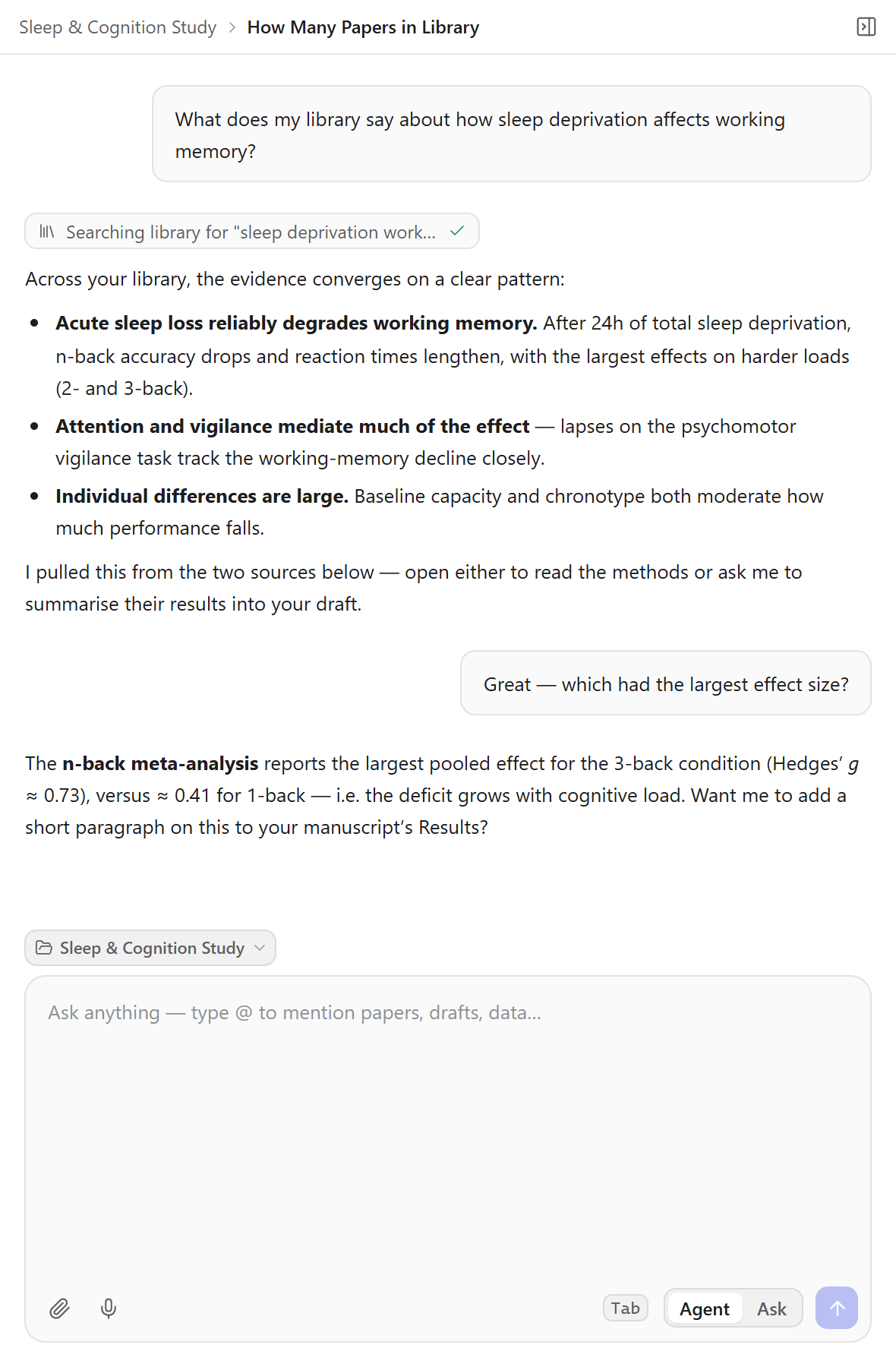
Kahubi answers from the papers, drafts, datasets, and transcripts you actually have. Type @ to pull any source into the conversation; the agent reads it, searches your library, and cites what it used.
- @-mention papers, drafts, datasets, interviews, and files
- Select text in any PDF to explain, summarize, or translate it
- Agent searches OpenAlex and the web, and imports papers for you
Write accurate manuscripts, grounded in your sources
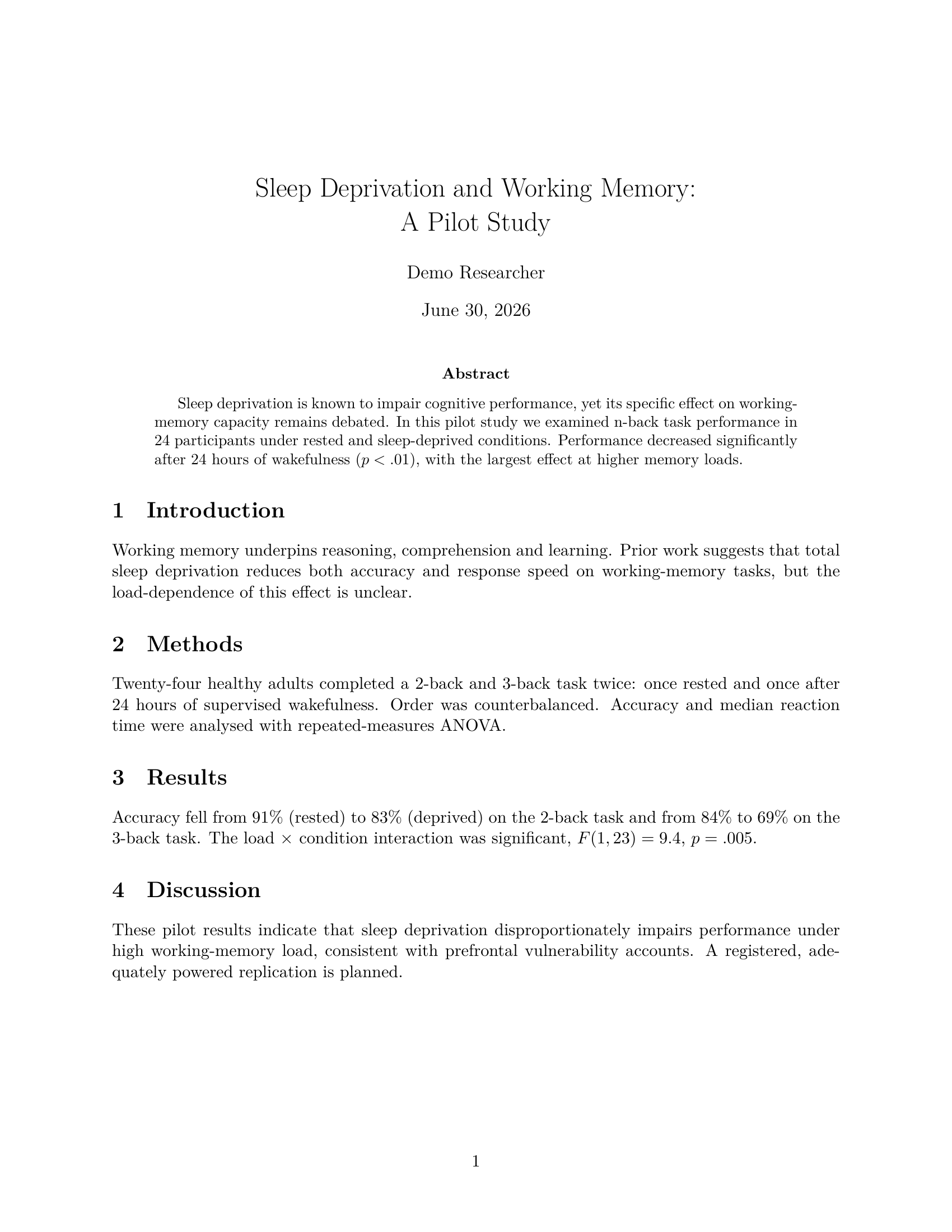
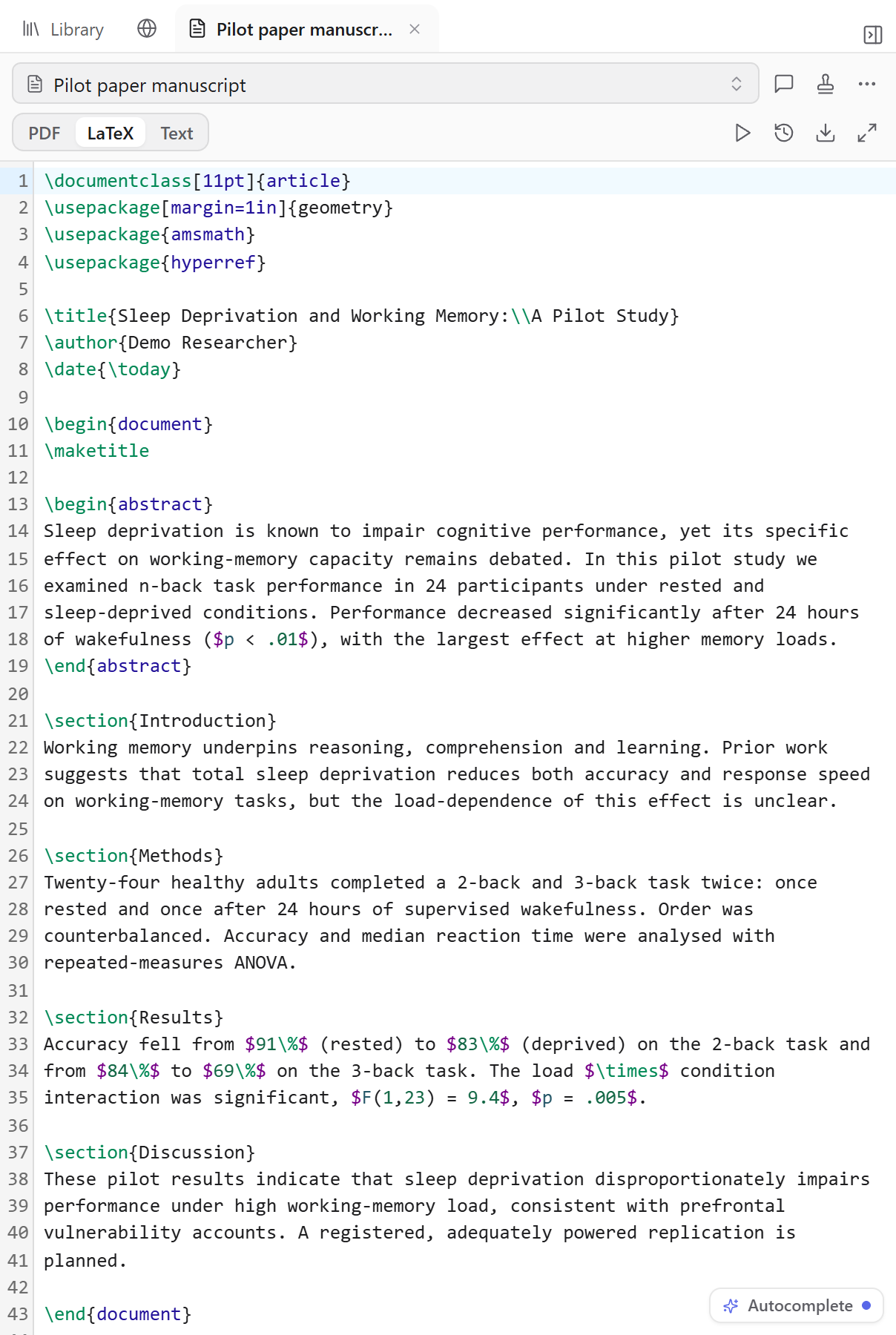
Draft in a clean editor and let the AI help — it writes in your voice, learned from your own publications, and every paragraph stays anchored to the papers, data, and notes you actually have, never invented. Read it as a formatted PDF, edit it like a Word document, or drop into LaTeX when you want fine control.
- Writes in your voice: a style profile learned from your published work, not a generic chatbot register
- Grounded in your library: the AI writes from your real papers and data, and cites what it used
- One click to a compiled PDF, plus Word (.docx) export and full version history

What changes
- PRISMA 2020-aligned screening logs and flow-diagram numbers generated from the actual process
- Reporting standards at hand: CONSORT, STROBE, PRISMA, COREQ
- Vancouver/ICMJE-style referencing with abbreviation-friendly BibTeX export
- EU audio processing and documented subprocessors — answers for the ethics committee
- No training on your content, ever
Common questions
Can Kahubi run a full systematic review for a medical journal?
Does it search MEDLINE/PubMed?
How does Kahubi handle sensitive health data?
Reviews and manuscripts with the audit trail built in
PRISMA, Vancouver, EU data handling — and the mechanical work compressed. Free to start.