From raw sessions to findings stakeholders actually trust
User research is rigorous work done on product timelines. Kahubi transcribes your sessions, codes them with a real qualitative framework, runs your surveys with validated scales, and writes findings that trace back to what participants actually said — fast enough for the sprint review.
Free plan included. No credit card required.
Where Kahubi fits your work
Session recordings, transcribed with speakers
Upload usability sessions and interviews and get speaker-labeled transcripts in 99+ languages, processed on an EU endpoint — an easy answer to participant-privacy questions.
Thematic coding across every session at once
Run thematic or grounded-theory analysis over all your transcripts together. Themes come with supporting quotes from the actual sessions, not paraphrases.
Surveys with validated UX scales
Build questionnaires with SUS, UEQ-S, TAM and other validated scales, share a live link and QR code, and watch responses chart in real time — no separate survey tool.
Numbers behind the findings
Cross-tabs, significance tests, and reliability analysis on your survey exports and product data — so "users preferred B" comes with a p-value when it matters.
A research repository the AI can search
Past studies, reports, and transcripts become a library the agent reads and cites — so the answer to "didn’t we already test this?" takes seconds, not an archaeology dig.
Readouts, drafted from the evidence
Turn findings into a slide deck grounded in your sessions and data, export to PPTX, and polish in your own template.
Chat with your library, not a generic chatbot
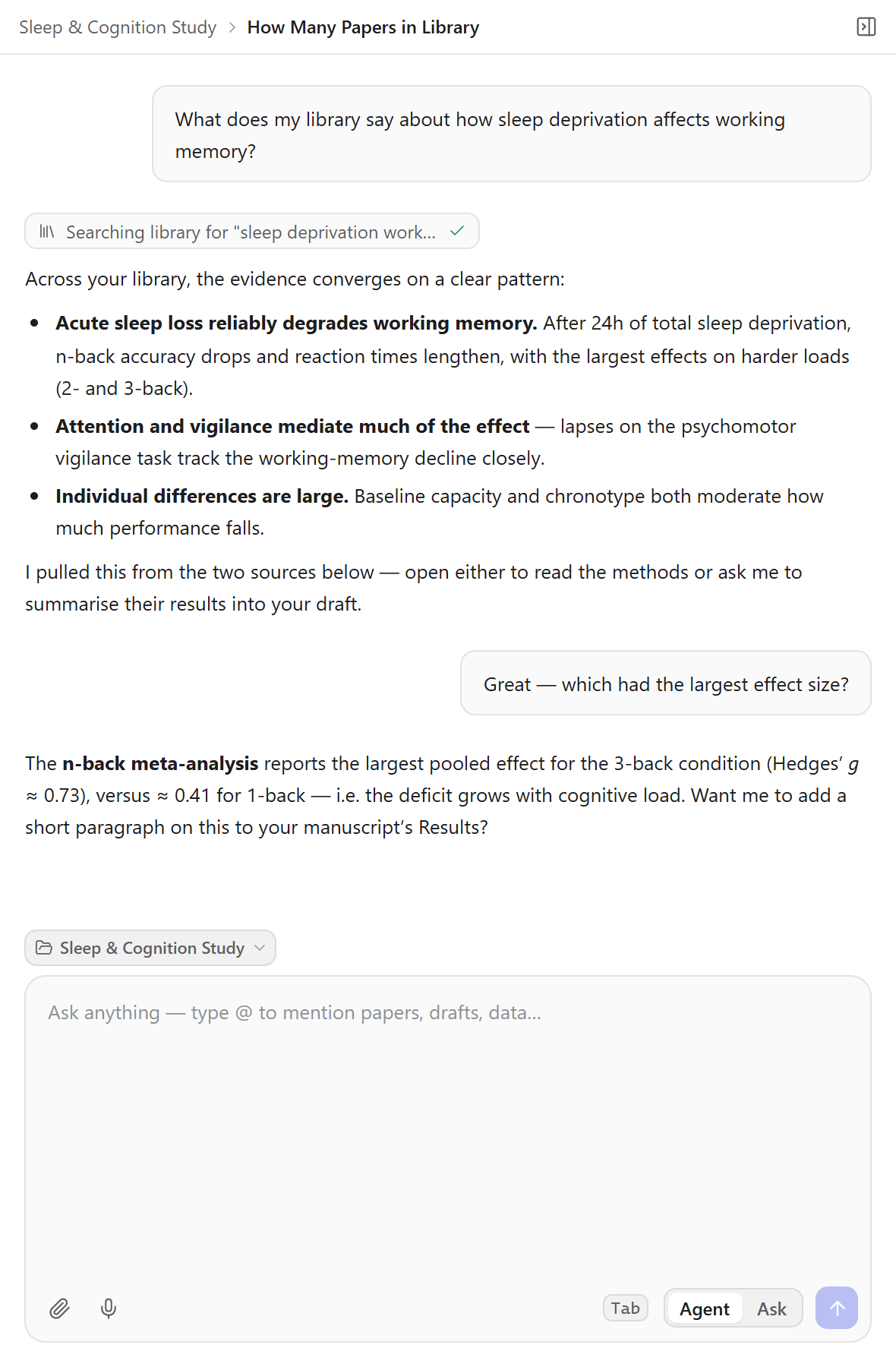
Kahubi answers from the papers, drafts, datasets, and transcripts you actually have. Type @ to pull any source into the conversation; the agent reads it, searches your library, and cites what it used.
- @-mention papers, drafts, datasets, interviews, and files
- Select text in any PDF to explain, summarize, or translate it
- Agent searches OpenAlex and the web, and imports papers for you
Write accurate manuscripts, grounded in your sources
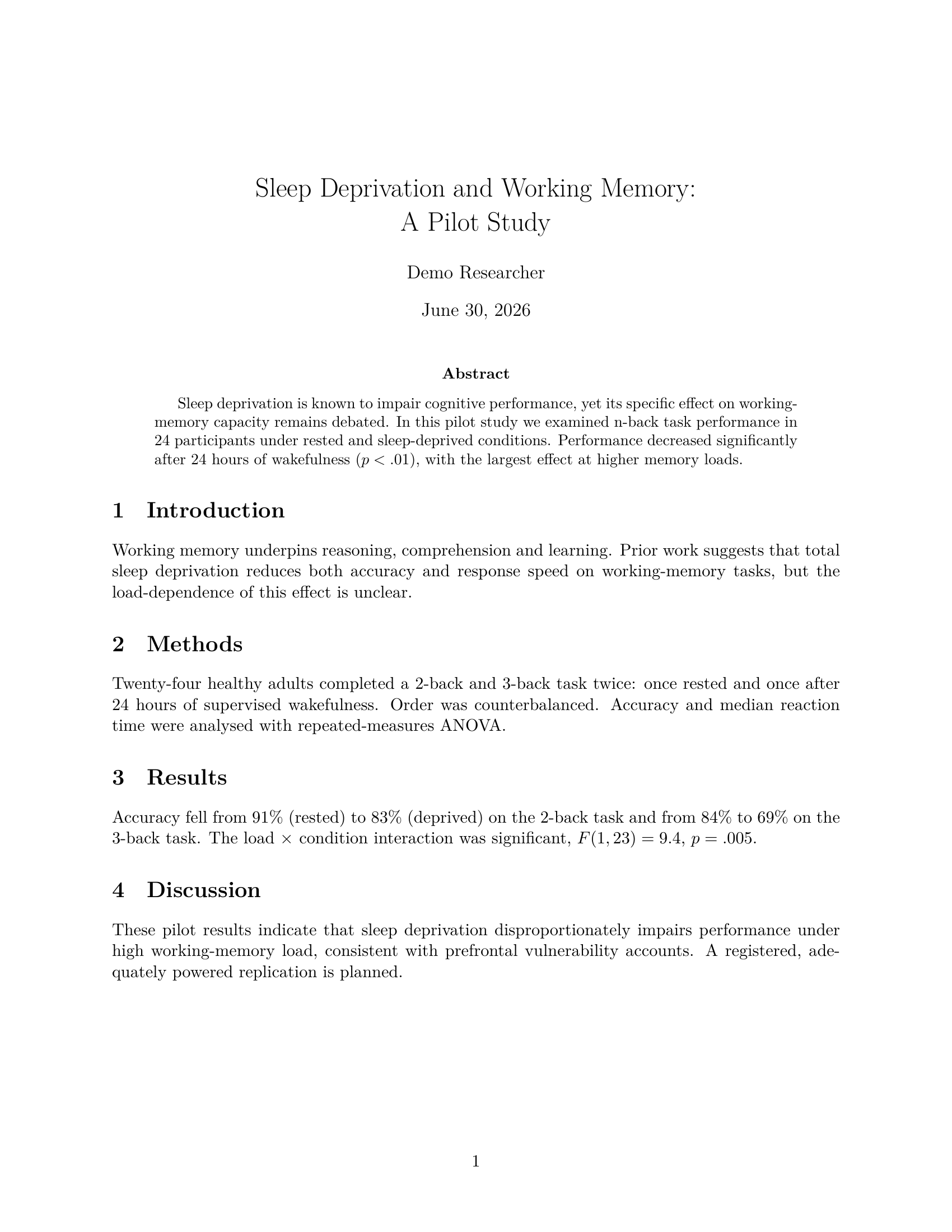
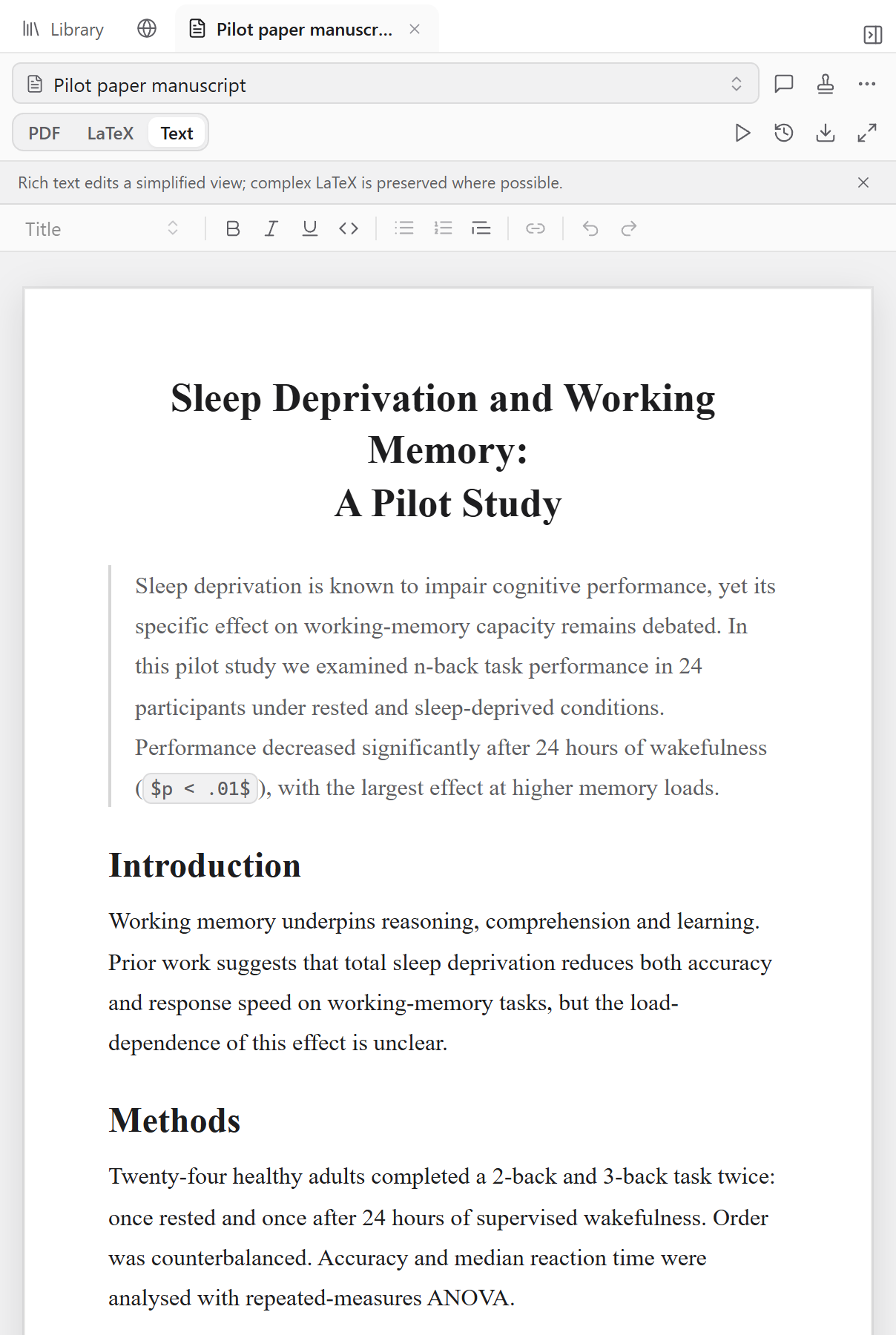
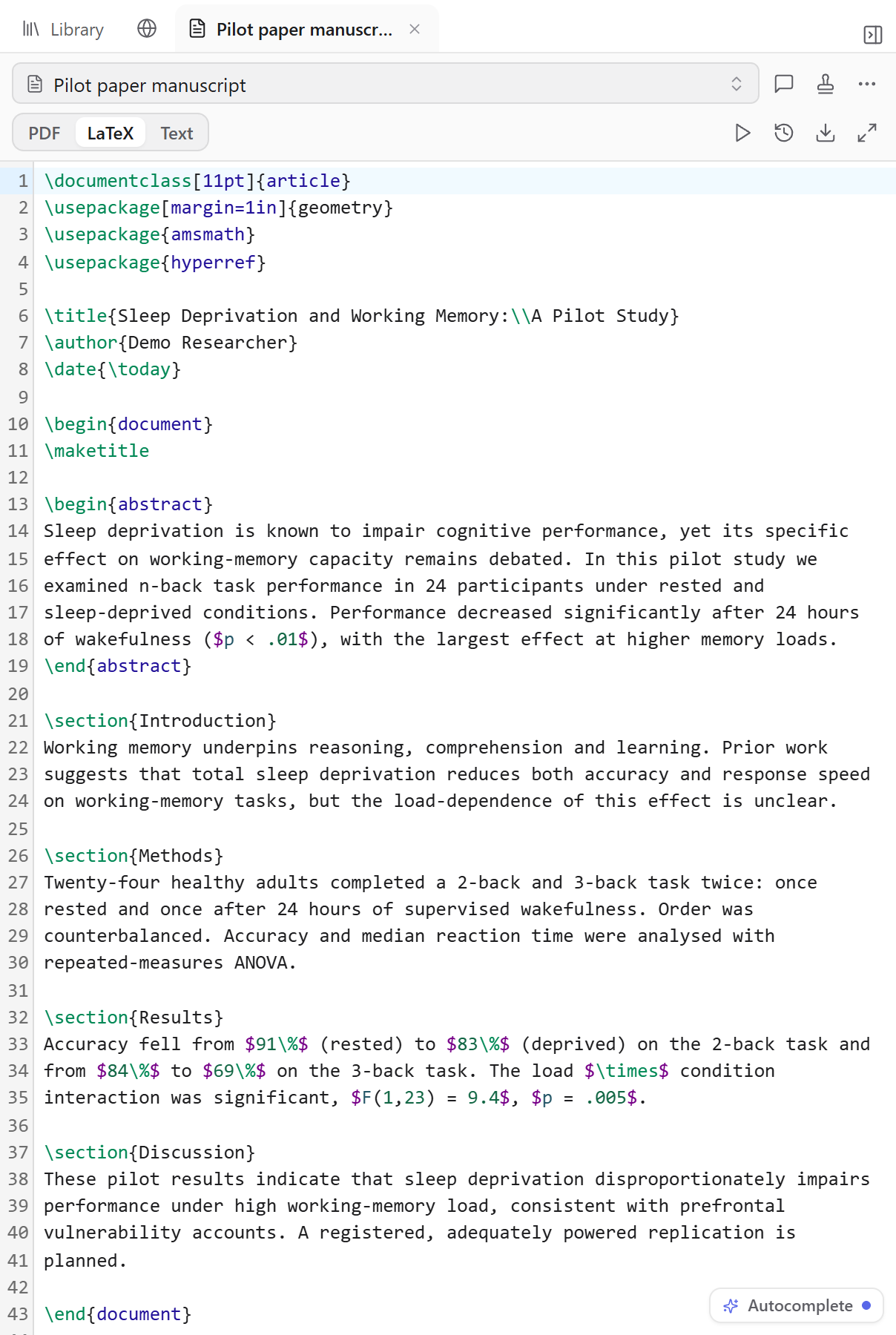
Draft in a clean editor and let the AI help — it writes in your voice, learned from your own publications, and every paragraph stays anchored to the papers, data, and notes you actually have, never invented. Read it as a formatted PDF, edit it like a Word document, or drop into LaTeX when you want fine control.
- Writes in your voice: a style profile learned from your published work, not a generic chatbot register
- Grounded in your library: the AI writes from your real papers and data, and cites what it used
- One click to a compiled PDF, plus Word (.docx) export and full version history
What changes
- Hours of session recordings turned into coded, quotable transcripts
- Findings traceable to real participant quotes — credibility in the stakeholder meeting
- Validated scales and real statistics without a second and third tool
- EU processing for participant recordings and GDPR-conscious handling
- A living research repository instead of findings lost in slide decks
Common questions
How is this different from the AI summaries in my recording tool?
What about participant privacy and consent?
We are a team of three researchers. Can we share a repository?
Make the next study your fastest yet
Free to start. Bring the recordings; leave with coded findings and a readout.