
At a glance
Iceland has six universities, plus Hólar, which became part of the University of Iceland group on 1 July 2026. All six have an AI policy approved by their university council or executive board, and all six current versions date from October 2025 to May 2026.
Read together, the policies agree on four things: you are responsible for everything you submit, significant AI use must be disclosed, teachers decide what is allowed in their own course, and personal or sensitive data does not belong in open AI tools. Where they differ is just as useful to know if you study, teach or supervise across institutions.
- Default for graded work: Reykjavík University does not allow AI unless the teacher permits it. The University of Akureyri allows it unless the teacher restricts it. The others leave it to the course.
- Citing AI: the University of Iceland and Reykjavík University give APA, IEEE and OSCOLA formats for citing AI output. The University of Akureyri and the Iceland University of the Arts say AI is never a source.
- Data: the University of Akureyri publishes the most detailed rule, a four-tier list of which tools may receive which data. Microsoft Copilot is the tool most often named as institutionally licensed.
- Research: only the Agricultural University and the Akureyri appendix spell out research-specific rules such as authorship and reproducibility. Rannís points grant applicants to the EU living guidelines.
The policies side by side
The table summarises each institution’s main AI document. Dates are the approval dates stated on the documents. "Teacher decides" means the course or assignment description sets the rule.
| Institution | Main AI document | Graded work | Disclosure | Citing AI | Data rule |
|---|---|---|---|---|---|
| University of Iceland (HÍ) | AI policy, University Council, 4 Dec 2025 | Teacher decides | Always, as instructed | APA, MLA, Chicago formats (Teaching Centre guide) | Must follow data protection law; never enter names, grades or sensitive data |
| Reykjavík University (HR) | Guiding principles, Executive Council, 14 Nov 2025 (revised May 2026) | Not allowed unless permitted | Always | APA, IEEE, OSCOLA formats (library guides) | Teachers must not enter personal or confidential data |
| University of Akureyri (HA) | Responsible AI policy, University Council, 30 Oct 2025 | Allowed unless restricted | Where applicable, with a standard statement | Never cite AI as a source | Four-tier tool list; personal data only in approved tools |
| Agricultural University (LbhÍ) | AI policy v3.0, University Council, 27 May 2026 | Teacher decides | When use significantly affected the work | Not specified | No personal or sensitive data in open tools without assessment |
| Bifröst University | AI policy, Executive Board, in force 2 Dec 2025 | Teacher decides; oral defence if misuse suspected | Not specified | Referencing rules apply (APA 7, OSCOLA) | Not specified |
| Iceland University of the Arts (LHÍ) | AI policy, Executive Council, 21 Nov 2025 | Teacher decides | Significant use, with a template statement | AI is not a reliable source | No personal, confidential or copyrighted material without permission |
Checked against each institution’s own pages on 12 October 2026. Policies are reviewed often (several commit to yearly review), so follow the source links for the current text.
University of Iceland (Háskóli Íslands)

The University Council passed the AI policy on 4 December 2025. It does not ban AI. It makes students and staff responsible for everything they submit in their own name, requires that AI use is always disclosed according to the instructions given, and commits the university to equal access to AI software. Breaking a teacher’s AI instructions in assignments, theses or exams can lead to sanctions.
Practical guidance lives on Setberg, the Teaching Centre’s site (the old gervigreind.hi.is address now redirects there). It has pages for students and teachers, a page on responsible and safe use, a guide to citing AI in APA, MLA and Chicago, and a model assignment where students write a short statement on their AI use after the bibliography. The adoption guide is blunt about data: "Setjið aldrei nöfn, einkunnir eða viðkvæmar upplýsingar inn í gervigreind" (never put names, grades or sensitive information into AI; our translation). It also recommends institutional accounts over personal ones.
The National and University Library’s research guide on AI lists tools for searching, screening and mapping literature, and states that Copilot is the only AI that the university and the library pay for. It warns that results "geta verið óáreiðanlegar" (can be unreliable; our translation). Since 1 July 2026 Hólar is part of the University of Iceland group, and its old website redirects to hi.is/holar. Hólar has not published separate AI guidance.
Reykjavík University (Háskólinn í Reykjavík)

Reykjavík University’s guiding principles were approved by the Executive Council on 14 November 2025 and revised by Teaching Development in May 2026. They are the strictest default in Iceland: AI tools are generally not permitted in graded assessment unless the teacher specifically allows them, and in final exams AI is generally prohibited unless the syllabus says otherwise. Any use must be disclosed.
The principles are unusually concrete about checking. Teachers may ask for an honour statement, screenshots, version history in Office 365 or Overleaf, or an oral defence, and the document notes that Turnitin cannot give definitive proof of AI use. Teachers must not enter personally identifiable or confidential information into AI systems.
The library’s citation guides, updated in October 2026, show how to cite AI in APA (with "Risamállíkan" as the Icelandic term for large language model), how to disclose AI use in IEEE acknowledgments, and how to reference AI in OSCOLA for law.
University of Akureyri (Háskólinn á Akureyri)

Akureyri takes the most permissive default and the most detailed approach. The policy, approved on 30 October 2025, starts from the principle that students and staff may use AI tools in their studies, and teachers who want limits must write them into the course or assignment description. At the same time it draws a firm line on sources: "Aldrei má vísa í gervigreind sem heimild" (AI must never be cited as a source; our translation). Sources found with AI help are cited in the normal way.
Two appendices do the practical work. Appendix A asks for transparent use, gives a standard disclosure statement, asks for prompts and settings to be kept where reproducibility matters, and says AI detection tools are unreliable and should not decide misconduct cases. Appendix B sorts tools into four tiers by what data they may receive.
The library’s page on AI in study and research recommends using AI to plan (refine a question, find keywords, build search strings) but not to find sources, and points to scite and the library’s own search instead.
| Tier | Tools named | What data |
|---|---|---|
| 1. Approved | borg.unak.is (internal), Copilot for Microsoft 365, scite, Leganto AI Syllabus Assistant | The only tools where staff may process personal data |
| 2. Permitted | ChatGPT Team, Claude for Work | Bought by a unit or person who checks the terms |
| 3. Limited | Free ChatGPT, Gemini, Perplexity | Public, non-sensitive data only |
| 4. At your own risk | DeepSeek, Qwen (consumer versions) | Public, own or non-sensitive data only |
From Appendix B of the University of Akureyri policy.
Agricultural University of Iceland (Landbúnaðarháskóli Íslands)

The Agricultural University’s policy is the newest, approved by the University Council on 27 May 2026 (version 3.0), and it is the most explicit about research. Teachers state in course or assignment descriptions whether and how AI may be used. Students disclose AI use when it has significantly affected content, analysis, text, code or results.
For research, the policy stresses integrity and reproducibility, requires researchers to verify AI output, and states that "Gervigreind má ekki vera skráð sem höfundur" (AI may not be listed as an author; our translation). Personal or sensitive data may not go into open or unvetted AI tools without authorisation, a risk assessment and a data processing agreement. The policy is in Icelandic only and is reviewed every year.
Bifröst University (Háskólinn á Bifröst)
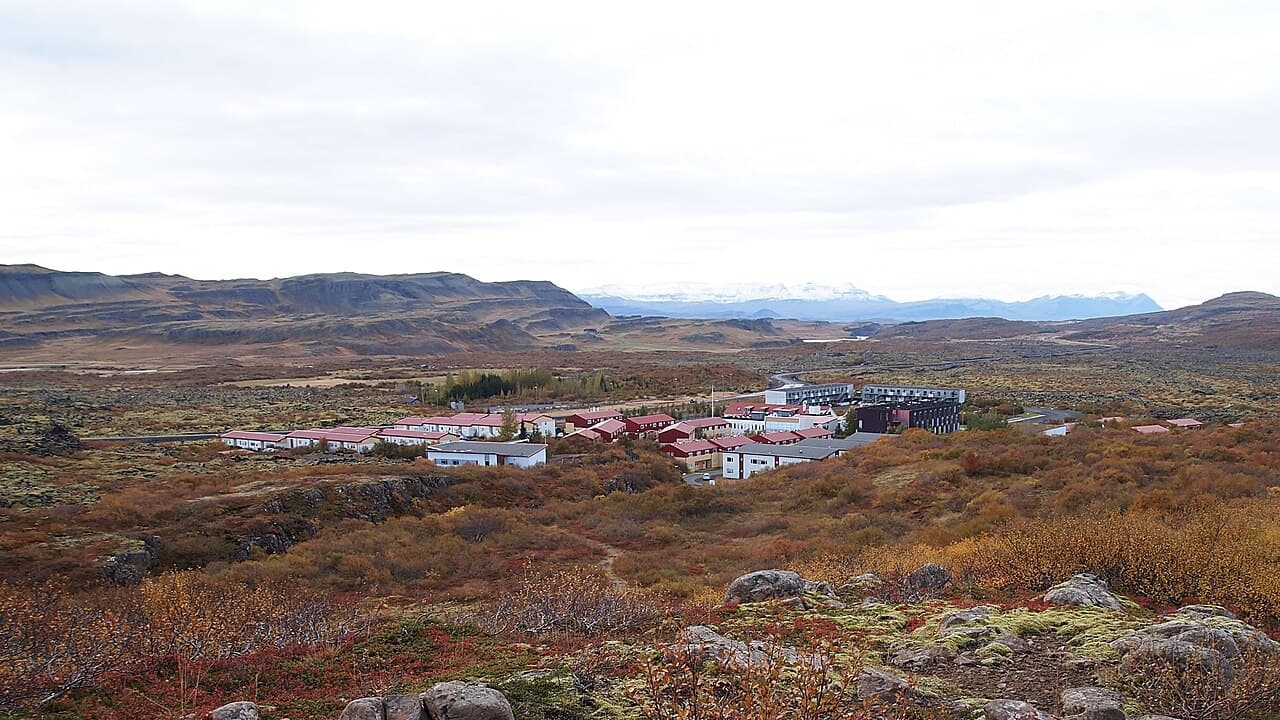
Bifröst’s one-page policy came into force on 2 December 2025 and covers students, teachers and staff in teaching, research and administration. AI use must follow the code of ethics and the usual referencing rules (APA 7 in business and social sciences, OSCOLA in law). The university promises training and resources on AI’s capabilities, limits and ethics, and reserves the right to monitor use.
The policy is candid that "Mjög erfitt er að sanna notkun á gervigreind í texta" (it is very difficult to prove AI use in text; our translation). Its answer, set out in the study handbook, is process-based: if unauthorised AI use is suspected, the teacher may call the student to an oral defence within 48 hours.
Iceland University of the Arts (Listaháskóli Íslands)
The arts university’s policy, approved on 21 November 2025, lists what AI may help with (drafting, brainstorming, summaries, translation with human review) and what may not be entered into it: personal data, confidential research or university material, and copyrighted material without permission. It treats AI as not "sjálfstæð áreiðanleg heimild" (an independent reliable source; our translation) and gives template statements for disclosing AI use and AI translation.
Creative work gets its own rule in the student guidelines: AI may be used in creative work in consultation with each course’s teacher, and its use must always be disclosed. The library’s source-work page collects the student and teacher guidelines and links to the University of Iceland’s AI guidance.
Which AI tools Icelandic universities name
Few institutions recommend specific tools, and naming a tool in a policy is not the same as endorsing it. Two patterns stand out. Microsoft Copilot is the tool most often described as institutionally licensed (the University of Iceland and its library, and Akureyri’s approved tier). And libraries point researchers to citation-grounded search tools such as scite rather than to general chatbots for finding literature.
| Tool | Where it appears |
|---|---|
| Microsoft Copilot | Licensed at HÍ and its library; approved tier at HA; named at RU, LHÍ |
| ChatGPT | Named by every institution; free version is a caution example at HÍ and limited tier at HA |
| Claude, Gemini, Perplexity | HA library and policy tiers; HÍ library guide |
| scite | HA approved tier and library; HÍ library guide |
| Elicit, Consensus, Keenious, SciSpace, ResearchRabbit, Litmaps, Asta | HÍ library research guide |
| Rayyan, Covidence, ASReview | HÍ library research guide (screening for systematic reviews) |
| Turnitin | RU and HA, both noting AI detection is not proof |
The national picture
Iceland’s first AI strategy dates from 2021, and its first AI action plan (2025 to 2027) sets out 20 actions, including implementing the EU AI Act and creating a centre for AI and language technology. Higher education now sits with the Ministry of Culture, Innovation and Higher Education. In October 2026 a government working group published "Gervigreind til góðs" (AI for good), which observes that university AI policies so far mostly regulate what use is allowed and do less to build students’ AI skills in their own fields. Its recommendations are not yet adopted policy.
For researchers, the most concrete national rule comes from the funder. The Rannís Research Fund handbook for 2027 grants asks for transparent, lawful and responsible use of generative AI, points applicants to the European Commission’s living guidelines, states that the fund does not use AI to assess applications, and bars review panels from using AI to assess them. The Data Protection Authority (Persónuvernd) publishes general guidance on chatbots and AI note-takers that is useful for anyone handling interview or patient data.
Language matters here too. Icelandic was the first language other than English in GPT-4’s development, through a 2023 collaboration with the Icelandic government, and the national language technology programme continues to fund Icelandic tools. Benchmarks still show room for improvement in Icelandic, which is worth remembering before relying on AI for Icelandic-language text.
The EU living guidelines for researchers
Iceland takes part in Horizon Europe, and Rannís already refers applicants to the European Commission’s "Living guidelines on the responsible use of generative AI in research" (third version, May 2026). They are not binding, but they are the closest thing to a shared European standard, and Icelandic policies line up with them closely. The guidelines rest on four principles: reliability, honesty, respect and accountability.
For researchers they boil down to six recommendations:
- Remain ultimately responsible for your scientific output. AI systems are neither authors nor co-authors, and you are responsible for checking every reference and summary.
- Use generative AI transparently. Disclose substantial use, such as literature review, data interpretation or developing hypotheses, in the methods section. Basic editing help is not substantial.
- Protect privacy, confidentiality and intellectual property. Do not upload unpublished or sensitive work without assurance it will not be reused.
- Respect national, EU and international law, including plagiarism and personal data rules.
- Keep learning how to use AI well, and keep its environmental footprint in mind.
- Avoid substantial AI use in sensitive activities such as peer review and evaluating proposals.
Does the EU AI Act apply in Iceland?
Not yet. Iceland is in the EEA, not the EU, so the AI Act (Regulation (EU) 2024/1689) applies only once it is incorporated into the EEA Agreement and passed into Icelandic law. As of October 2026 incorporation is still being worked on, with possible adaptations under review in an EFTA working group and no date set. The government has said a bill will go to Alþingi once that step is done, and the minister announced a public consultation on implementation for this autumn.
Within the EU, the act was amended by the "Digital Omnibus on AI" (Regulation (EU) 2026/1744), adopted on 8 July 2026 and in force since 27 July 2026. It moved the high-risk rules to 2 December 2027 for Annex III systems (such as AI used in education and admissions) and 2 August 2028 for AI in regulated products. It also rewrote the AI literacy duty in Article 4: providers and deployers must now "take measures to support the development of AI literacy" of their staff, without having to guarantee any specific level. When the act reaches Iceland, the amended version is the one that will matter.
One point often misunderstood: the act’s research exemptions (Article 2(6) and 2(8)) cover AI systems developed solely for scientific research, and research or testing before a system is placed on the market. They do not cover simply using a general-purpose tool such as ChatGPT in your research. When a university provides an AI tool, for example a licensed Copilot, it acts as a deployer, which is why AI literacy and data rules sit with the institution.
What this means if you study or research in Iceland
The policies differ in detail, but a researcher who follows these habits will be on the right side of every one of them, and of the EU guidelines:
- Check the course or assignment description first. In every institution the teacher’s rule wins, and at Reykjavík University the default is no.
- Disclose any AI use that shaped your work, with tool, version and purpose. Keep prompts and outputs for anything that touches results, data or code.
- Do not cite AI as a source for facts. Find and cite the original source. If you quote AI output itself, use your institution’s format (HÍ and HR publish them).
- Verify every reference an AI tool gives you. Invented citations are the most common failure, and you are responsible for them.
- Keep personal, sensitive, unpublished and copyrighted material out of open tools. Use institutionally licensed tools where they exist.
- In theses, grant applications and peer review, expect stricter rules: Rannís bars AI from assessing applications, and the EU guidelines advise against substantial AI use in peer review.
Verifiable by design
Kahubi finds and imports sources for you, then lets you read and write side by side. Every claim points back to a reference you can check, so it supports your writing rather than replacing it.
How we compiled this, and corrections
We read each institution’s published AI policy, teaching centre pages and library guides in Icelandic and English on 12 October 2026, and quote them briefly in the original with our own translation. Where we found no published guidance, we say so. Policies are updated often, so the source list below links to every document we used.
If we have described your institution inaccurately or missed a newer document, please write to us and we will correct it.
Sources
- University of Iceland. AI policy (Gervigreindarstefna), passed by the University Council 4 December 2025.english.hi.is
- University of Iceland. "University of Iceland aims for a leading role in AI", news, 17 December 2025.english.hi.is
- University of Iceland, Setberg. Gervigreind við Háskóla Íslands.setberg.hi.is
- University of Iceland, Setberg. Ábyrg innleiðing gervigreindartóla í námi og kennslu.setberg.hi.is
- University of Iceland, Setberg. Leiðbeiningar um tilvísanir fyrir gervigreind (PDF, June 2025).setberg.hi.is
- University of Iceland, Setberg. Nemendur látnir útskýra notkun sína á gervigreind.setberg.hi.is
- National and University Library of Iceland. Rannsóknarþjónusta: Gervigreind (updated 17 September 2026).leidarvisar.is
- Act no. 56/2026 on Hólar joining the University of Iceland group.island.is
- Reykjavík University. Guiding principles for the use of AI in teaching and learning (14 November 2025, revised May 2026).ru.is
- Reykjavík University Library. APA: ChatGPT (updated 9 October 2026).bokasafn.ru.is
- Reykjavík University Library. IEEE: Gervigreind (updated 9 October 2026).bokasafn.ru.is
- University of Akureyri. Guiding policy on the responsible use of AI (30 October 2025).unak.is
- University of Akureyri. Appendix A: guidelines, risk management and misuse.unak.is
- University of Akureyri. Appendix B: data security and privacy.unak.is
- University of Akureyri Library. Gervigreind í námi og rannsóknum.unak.is
- Agricultural University of Iceland. Gervigreindarstefna, STE-0375 v3.0 (27 May 2026).branda.lbhi.is
- Bifröst University. Stefna um notkun gervigreindar (in force 2 December 2025).bifrost.is
- Bifröst University. Handbók um nám og kennslu (reviewed 20 August 2026).bifrost.is
- Iceland University of the Arts. AI policy, STE-0294/0295 (21 November 2025).lhi.is
- Iceland University of the Arts. Instructions for students on AI use (2024).lhi.is
- Government of Iceland. First AI action plan 2025 to 2027 (2 July 2025).stjornarradid.is
- Government of Iceland. Gervigreind til góðs, working group report (9 October 2026).stjornarradid.is
- Rannís. Research Fund handbook for 2027 grants (sections 4.5 and 9.1.3).assets.ctfassets.net
- Persónuvernd (Icelandic Data Protection Authority). Gervigreind.island.is
- Government of Iceland. "Head start for Icelandic" (14 March 2023).government.is
- European Commission. Living guidelines on the responsible use of generative AI in research, third version (May 2026).research-and-innovation.ec.europa.eu
- Regulation (EU) 2024/1689 (AI Act), EUR-Lex.eur-lex.europa.eu
- EFTA. EEA-Lex entry for Regulation (EU) 2024/1689.efta.int
- Government of Iceland. Announcement on the AI Act bill (28 May 2026).stjornarradid.is
- Almannarómur. Innleiðing gervigreindarreglugerðar ESB á Íslandi (tracker, 5 October 2026).stadagervigreindar.is
- Vísir. Minister on the first AI laws and rules (27 September 2026).visir.is
- Regulation (EU) 2026/1744 (Digital Omnibus on AI), OJ L, 24 July 2026.data.europa.eu
Photo credits
- Reykjavík, with Hallgrímskirkja on the skyline: Steinninn, CC BY-SA 4.0, via Wikimedia Commons.
- Aðalbygging, the University of Iceland main building, Reykjavík: TommyBee, public domain, via Wikimedia Commons.
- Reykjavík University at Nauthólsvík, with Perlan behind: Berserkur, CC BY-SA 4.0, via Wikimedia Commons.
- The University of Akureyri campus: Steinninn, CC BY 4.0, via Wikimedia Commons.
- Hvanneyri, home of the Agricultural University of Iceland: Landbúnaðarháskóli Íslands, CC BY-SA 4.0, via Wikimedia Commons.
- Bifröst University in the lava landscape of Borgarfjörður: Frl.oeser, public domain, via Wikimedia Commons.
Kahubi. (2026, October 12). How Icelandic universities guide students and researchers on generative AI. Avidemic AB. https://kahubi.com/guides/generative-ai-guidelines-iceland-universities
Last updated 2026-10-12.